
 By
By 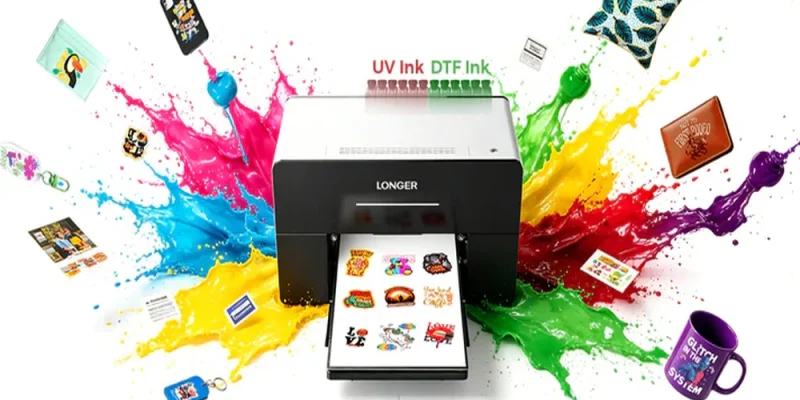
Having spent the last ten years building and refining UV printers, I have seen the industry undergo a massive evolution. A decade ago, industrial ultraviolet printing was reserved almost exclusively for large manufacturing facilities with high-volume budgets and sprawling factory floors. Today, the single most exciting shift in our industry is the democratization of this technology: the rise of the Desktop UV Printer.
If you are entering the world of custom printing or searching for ways to add high-margin products to your business, understanding what a desktop UV printer is-and how it works-is one of the most profitable moves you can make.
Understanding the Core Technology
At its foundation, a UV printer utilizes ultraviolet LED light to instantly cure (or dry) specially formulated ink as soon as it is deposited on a surface. Traditional inkjet printers rely on heat or air to evaporate solvents or water, which requires absorbent substrates like paper or cotton. A UV printer completely bypasses this limitation.
When the liquid UV ink hits a material, intense ultraviolet light emitted from an adjacent LED lamp instantly triggers a photopolymerization reaction. The ink transforms from liquid to solid in a fraction of a second, bonding directly to the top layer of the material rather than soaking into it.
A desktop UV printer brings this advanced industrial process into a compact, benchtop format. While smaller in footprint, it shares the exact same core curing mechanics as its industrial-scale predecessors.
Why the Desktop UV Printer Is a Game-Changer
In my ten years of designing and manufacturing these machines, I have observed four key features that make the desktop UV printer an indispensable tool for entrepreneurs and small businesses:
Unmatched Material Versatility: Because the ink cures instantly on the surface, a desktop UV printer can print on virtually anything. From acrylic, wood, glass, and metal to leather, ceramic tiles, phone cases, and plastic components, the possibilities are practically endless.
Textured and Dimensional Printing: Beyond standard full-color images, UV printing allows you to layer clear glossy inks to create raised textures, braille, embossed effects, and tactile patterns. This adds physical depth to your products that traditional flat printing simply cannot replicate.
Instant Drying for Immediate Shipping: In a fast-paced business environment, turnaround time is everything. Because the ink is fully cured the moment the job finishes, printed items can be handled, packaged, or shipped immediately without any fear of smudging.
Vibrant White Ink Base: Modern desktop UV printers feature dedicated white ink channels. Printing a layer of white ink underneath colorful graphics ensures bright, opaque, and true-to-life colors on dark, transparent, or clear materials like acrylic or dark wood.
Key Components to Look For
If you are shopping for your first machine, navigating the technical specifications can feel overwhelming. From a manufacturer’s point of view, these are the critical elements you should evaluate:
Printhead Quality and Configuration: The printhead determines your resolution, drop size accuracy, and longevity. Look for reliable, industrial-grade micro-piezo printheads capable of handling white, color, and clear (varnish) inks smoothly.
Print Area and Z-Axis Height: Desktop model footprints vary, but a standard entry bed size often spans around 12×18 inches or A3 format. Pay close attention to the adjustable clearance height (Z-axis). If you plan to print on thicker items like boxes, tumblers, or golf balls, ensure the machine accommodates at least 4 to 6 inches of height.
Air-Cooled LED Lamps: High-quality LED UV lamps offer thousands of hours of operational lifespan without generating excess heat that could warp heat-sensitive plastic substrates.
Rotary Attachments: If your business model involves printing on cylindrical objects like water bottles, candle jars, or tumblers, choose a printer that supports a seamless rotary axis system.
Finding the Right Machine for Your Journey
Over a decade in this business has taught me that buying a printer is not just a hardware purchase-it is an investment in a long-term business tool. A high-quality desktop UV printer opens doors to personalized corporate gifts, custom merchandise, architectural signage, and short-run prototyping with exceptionally high profit margins.
Before making your decision, assess your production goals, verify that your manufacturer provides solid technical support and replacement parts, and always request physical print samples on your target materials. With the right setup, a desktop UV printer can easily become the most versatile and profitable piece of equipment on your workbench.










Comments